Decking Material: Composite, Cedar or Pressure-Treated Lumber?
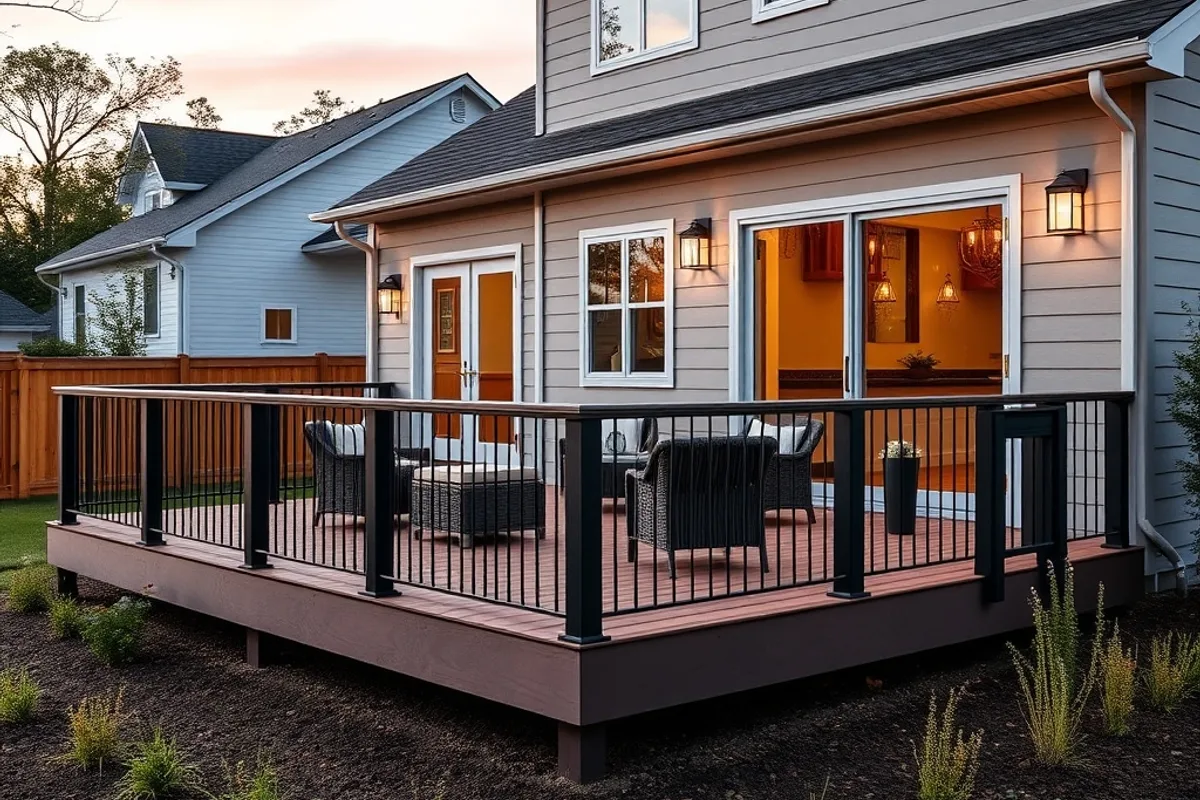
The decking board is the easy part of the decision. The frame, fixings, ventilation and drainage determine whether any board reaches its advertised lifespan.
Decking is one of the few exterior projects a confident homeowner can genuinely evaluate. The boards are visible, the prices are comparable and the trade-offs are mostly honest. What is less obvious is that the surface material is only one part of the system. A premium board on an under-ventilated frame will fail sooner than a modest board on a well-built one.
There are three mainstream choices for a domestic deck: composite, cedar (or another durable natural wood) and pressure-treated lumber. Each has a different cost profile, maintenance rhythm and failure mode. The right answer depends on climate, budget, how much shade the deck gets and how willing you are to refinish it.
The three real options
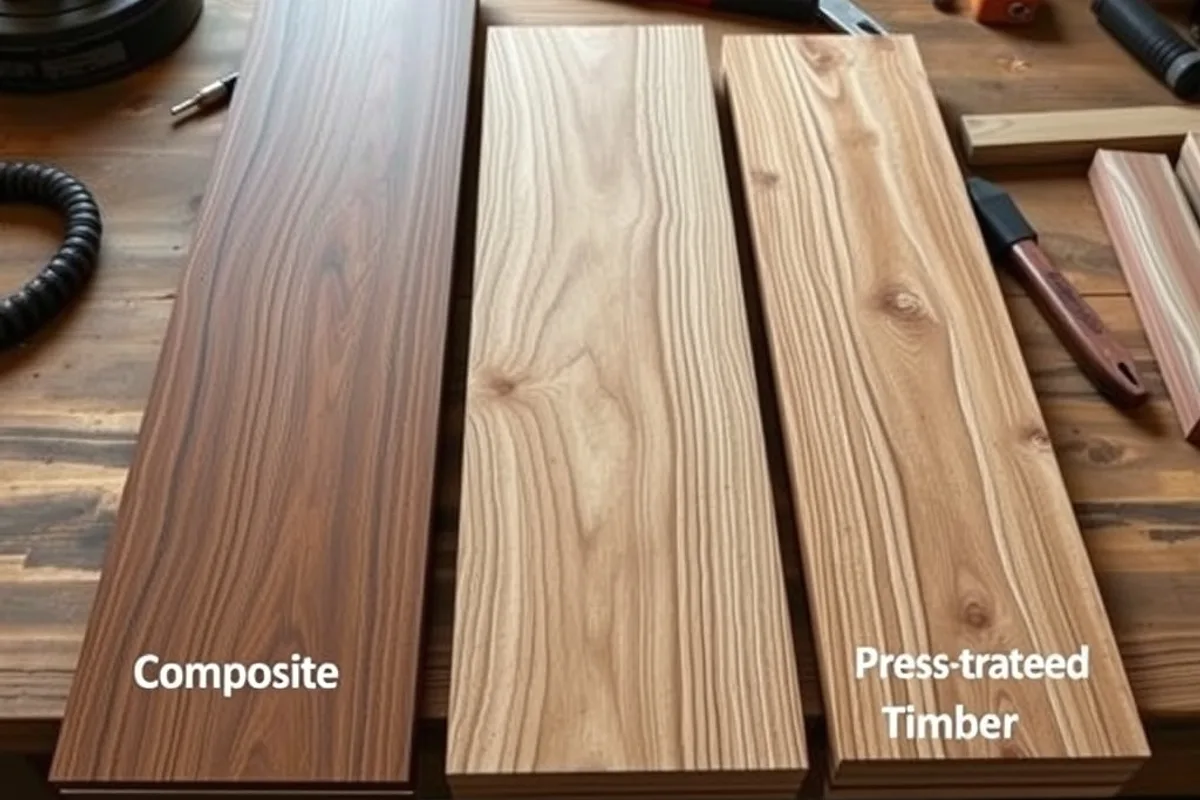
Composite is a manufactured board of wood fibre or plastic, or a blend of both. It is uniform, splinter-free and available in many colours. Cedar is a naturally durable softwood with a warm colour and a distinctive scent. Pressure-treated lumber is softwood impregnated with preservative to resist rot and insects; it is the budget standard in many markets.
Hardwood decking (ipe, cumaru, garapa) is a fourth option, but price and sustainability concerns put it outside most domestic budgets. If you are considering it, ask for documented provenance and check local restrictions.
Composite: consistent, but not maintenance-free
Composite has improved dramatically, but the marketing still overpromises. It does not rot, splinter or need annual staining in the way wood does. It does, however, get dirty, and it can grow mould or algae in damp, shaded conditions. Most manufacturers recommend periodic cleaning, and some require it to keep the warranty valid.
Colour fade is the other issue. Early composites faded noticeably; modern capped boards are better, but no material is completely immune to UV. Dark colours absorb heat and can become uncomfortably hot underfoot in full sun. Light colours stay cooler but show dirt.
Composite expands and contracts with temperature, so the frame, gaps and perimeter clearances must follow the manufacturer's instructions. Ignoring those gaps causes buckling or squeaking. Cheap composite can also sag on spans that would be fine for wood, so check the joist spacing required for your chosen board.
On the positive side, composite is consistent, splinter-free and good underfoot for children and bare feet. It is a sensible choice for a low-maintenance deck in a mixed climate, provided you buy a reputable board and install it to spec.
Cedar and natural wood
Cedar is naturally resistant to rot and insects, dimensionally stable for a softwood and pleasant to work. It ages to a silver-grey if left untreated, which many people prefer, or can be oiled to keep its warm tone. It is lighter than composite and easier to cut and fasten.
The catch is maintenance and cost. Cedar needs cleaning and re-oiling every year or two if you want to preserve the colour. It can dent under heavy furniture and is softer than many hardwoods. It also varies in quality; specify clear or tight-knot grades for a deck surface, and avoid board ends that are full of pith.
Cedar is a strong choice when the deck is visible, the budget allows and the owner is willing to do a little upkeep. It is a poor choice for someone who wants to forget the deck exists for a decade.
Pressure-treated lumber
Pressure-treated pine is the workhorse. It is inexpensive, widely available, structurally strong and easy to replace board by board. Modern treatments are much less hazardous than older formulations, but you should still follow handling guidance, wear protection when cutting and avoid burning offcuts.
Untreated or poorly maintained pressure-treated wood will weather to grey and can check and split. It benefits from a stain or water repellent after installation and every few years thereafter. The surface can be rough, and splinters are a real possibility, especially on older boards. Pre-drilling reduces splitting near ends.
For budget-sensitive projects, pressure-treated lumber is hard to beat. It is also the easiest material to repair invisibly, because a single board can be swapped without disturbing the rest of the deck. If the deck is large and the budget finite, this is often the pragmatic answer.
Frame, fixings and code
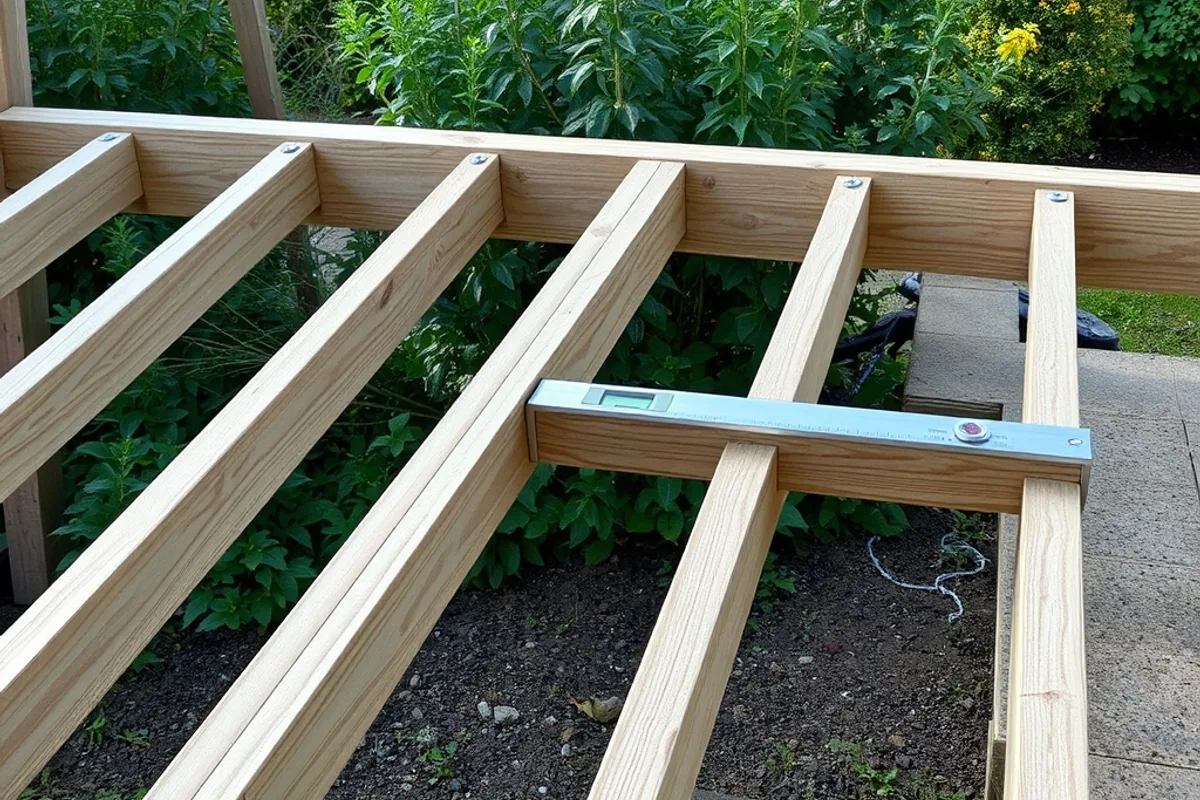
Every deck is a structure. The frame carries people and furniture, and it is exposed to water. A few principles apply regardless of surface material:
- Use treated or naturally durable framing, with joists sized for the span and spacing required by the board manufacturer.
- Keep the frame ventilated. Do not trap moisture between deck and ground. Ensure air can move under the structure and that water drains away.
- Use compatible fixings. Stainless steel or hot-dip galvanised fasteners resist corrosion; plain steel will stain timber and fail.
- Respect ledger flashing. Where a deck attaches to the house, the connection must shed water away from the wall.
- Check local rules. Height, guarding, stair geometry and planning permission vary by jurisdiction. A deck above a certain height usually needs a guardrail and may need approval.
Ventilation is especially important with composite, which traps moisture more than wood. Keep the underside clear, avoid backfilling soil against the frame and do not store items underneath in a way that blocks airflow.
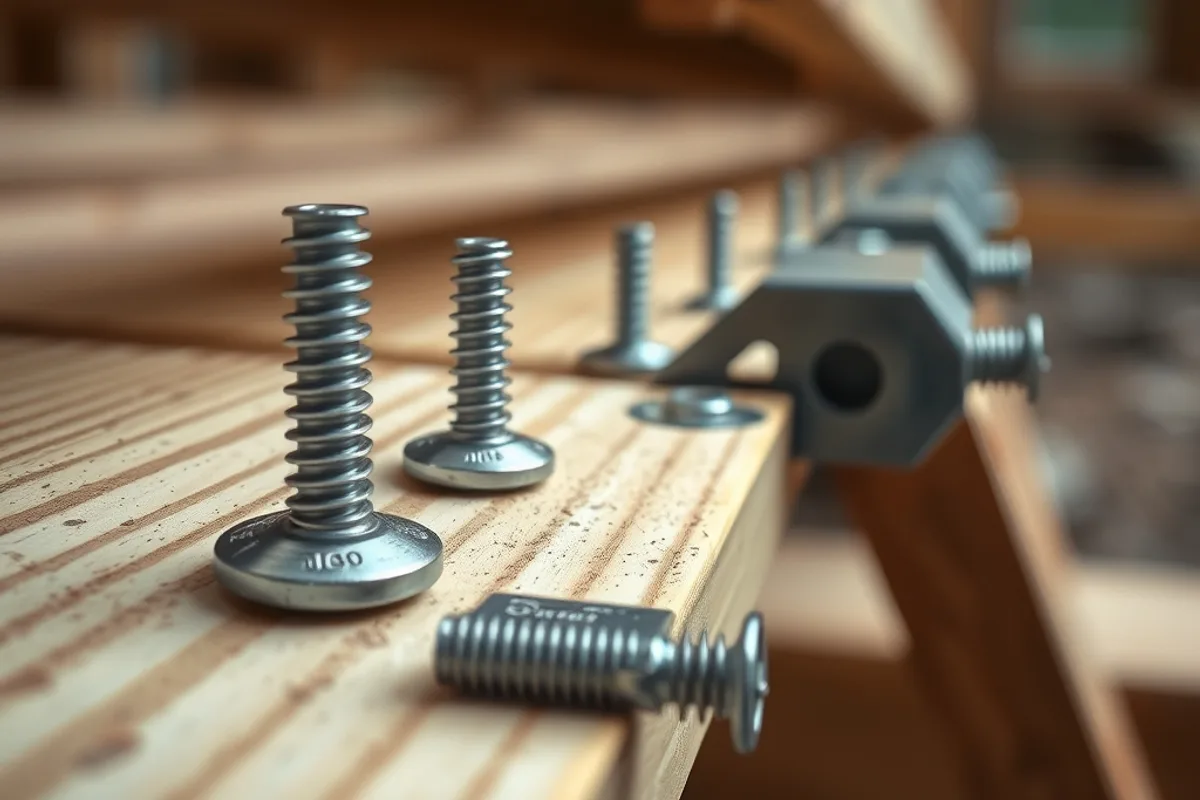
Fastening systems deserve a mention. Hidden clips give a clean surface but can loosen; face screws are visible but easy to inspect and tighten. For composite, use the manufacturer's clips and spacing. For wood, stainless screws with a small pilot hole reduce splitting and allow future removal.
The bottom line
Choose composite for low routine maintenance and a consistent look, accepting that it still needs cleaning and careful detailing. Choose cedar for a natural surface and a willingness to maintain it. Choose pressure-treated lumber for budget and repairability, accepting annual or biennial refinishing. Then spend the saved decision energy on the frame, ventilation, flashing and fixings — the parts nobody photographs but everybody feels when the deck starts to move.